

DIY vs. Hiring a Professional for Home Repairs: A Decision Framework

If you’re a homeowner or renter who can handle a paint job but balk at electrical work, this guide is for you. It walks you through the essential factors that turn a simple cost comparison into a practical risk‑based decision when weighing DIY vs. Hiring a Professional for Home Repairs.
You’ll learn how to assess the scope of work, understand liability and warranty implications, recognize when permitting is required, and gauge your own skill threshold. Armed with that framework, you can decide confidently which projects are safe to tackle yourself and which deserve a licensed expert.
The Core Trade-Off: Cost vs. Risk
When you weigh DIY vs. Hiring a Professional for Home Repairs, the first question is not “how much will I spend on labor?” but “what are the hidden costs of taking on the scope of work myself?” Labor savings are real, yet every project carries a liability profile that moves from the contractor to the homeowner the moment you pick up a tool.
Liability means you are responsible for any damage, injury, or code violation that results from an error. A small misstep—such as an improperly anchored fixture or a missed permitting requirement—can trigger re‑work, fines, or insurance complications that quickly outweigh the initial labor savings.
Warranty considerations follow the same logic. A professional’s work often comes with a written guarantee, and the contractor’s insurance backs it. When you DIY, any defect is yours to fix, and the lack of a formal warranty can leave you footing the bill for future repairs.
Finally, the skill threshold determines whether the risk is manageable. If the required techniques exceed your current abilities or the tools you own, the probability of costly mistakes rises sharply. Recognizing this trade‑off—lower upfront cost versus higher potential risk—helps you decide when the safest route is to bring in a licensed expert.
Repairs That Are Generally Safe for DIY
The decision to attempt a repair yourself hinges largely on the scope of work and the potential consequences of failure. Tasks that are generally safe for DIY share two critical traits: they are reversible and they do not involve structural integrity or hazardous systems. If a mistake occurs, the cost of correction should remain manageable without requiring extensive demolition or specialized equipment. These repairs typically do not trigger permitting requirements, as they fall outside the jurisdiction of building codes that mandate licensed oversight.
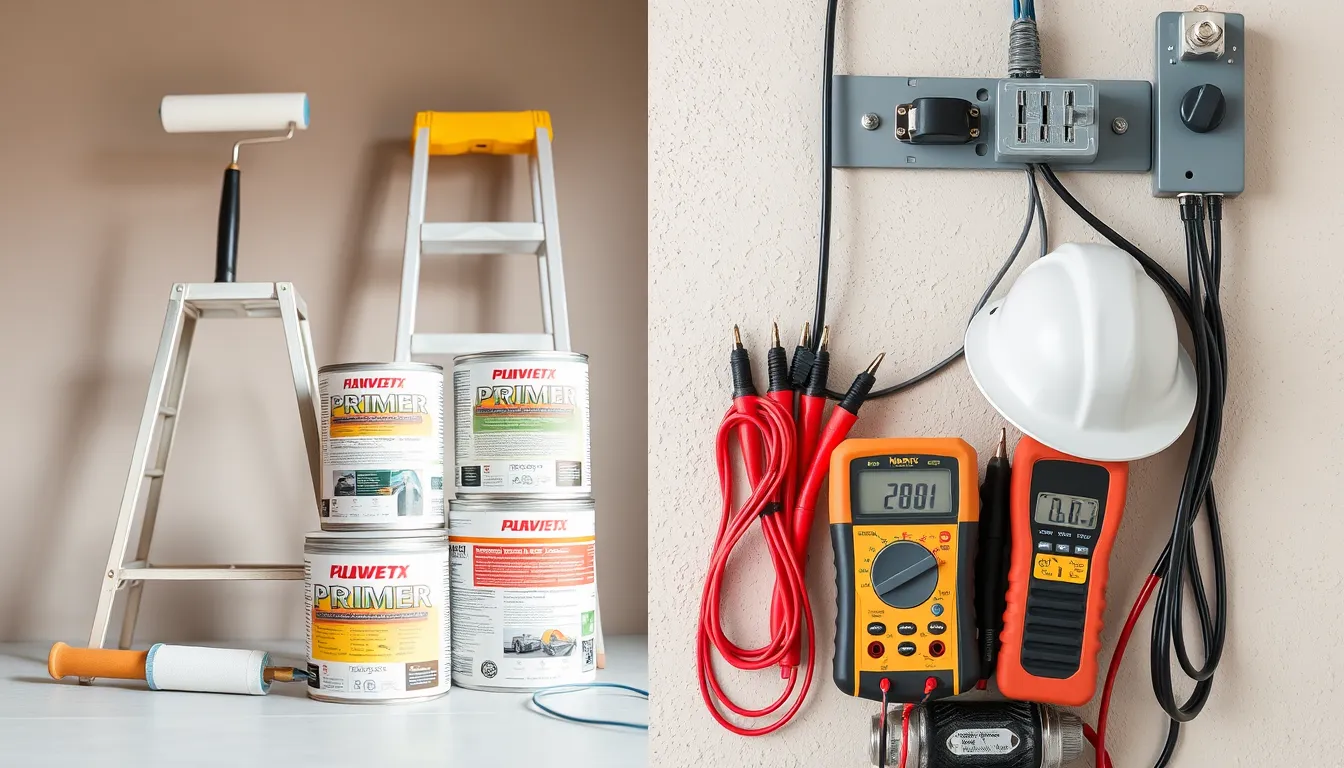
Painting interior walls is a straightforward example. The surface is easily stripped or repainted, and the skill threshold is low. Similarly, unclogging a drain with a plunger or snake addresses a minor plumbing issue without cutting into supply lines or altering pressure systems. Basic cosmetic updates, such as replacing cabinet hardware or installing a new curtain rod, offer immediate visual improvement with minimal technical complexity.
The key indicator here is liability. Because these tasks do not create significant long-term risks to the home’s value or safety, the homeowner retains full control over the outcome. You can undo a paint error or re-drill a hole without compromising the building’s framework. Focus on projects where the worst-case scenario is cosmetic rather than catastrophic. This approach minimizes the financial and physical risk associated with experimentation, allowing you to build confidence while maintaining a clear boundary for when professional intervention becomes necessary.
When You Must Hire a Licensed Professional
Liability and Structural Integrity
Certain systems demand licensed professionals because the consequences of error are severe. Structural modifications, major electrical rewiring, gas line installations, and roof framing repairs fall into this high-risk category. These tasks require precise adherence to local building codes, which are enforced through the permitting process. Attempting them without proper authorization not only violates regulations but often voids your home insurance policy. If a fire or collapse results from unpermitted work, insurers may deny claims entirely, leaving you liable for full replacement costs.
Licensed contractors carry professional liability insurance and bond their work, providing a safety net that DIY efforts cannot match. Their expertise ensures that the scope of work meets statutory standards for safety and durability. A minor miscalculation in load-bearing calculations or wire gauge selection can lead to catastrophic failure. By hiring a pro for these critical systems, you transfer the complex technical risks to a party equipped to manage them. This approach protects your home’s long-term value and ensures that any warranty provided by the contractor remains valid under legal scrutiny.
Evaluating Your Own Skill Level and Tools
Assessing Your Technical Readiness
Before starting any project, conduct an honest audit of your capabilities. Begin by identifying the skill threshold required for the specific scope of work. Have you completed similar repairs successfully before? If this is your first time removing a drywall patch or replacing a faucet, the learning curve is steep. Relying solely on online videos creates “tutorial confidence,” a false sense of competence that ignores the tactile feedback and judgment gained through physical practice. A video cannot teach you how to adjust torque on a wrench or recognize the subtle signs of a cracked stud.
Next, verify your tool inventory. Do you own the specialized equipment needed, or will you need to buy or rent it? Missing the right tool often leads to improvised solutions that compromise safety or finish quality. Finally, test your ability to follow technical instructions. Can you interpret architectural drawings or electrical schematics without confusion? If you hesitate at these steps, pause. Hiring a professional is not a failure of will; it is a strategic decision to avoid costly errors that exceed your current expertise and toolset.
How to Choose and Vet a Professional
Once you’ve decided to bring in outside help, the next step is to vet the professional carefully. Start by asking for proof of a valid state or local license and a current liability insurance certificate. Verify the license by checking the issuing agency’s online database; a missing or expired license is a red flag.
Next, request at least three recent references. Call the homeowners, ask how the contractor managed deadlines, budgets, and any unforeseen issues. A contractor who can provide positive feedback from a variety of projects is more reliable than one who offers only vague testimonials.
When you receive an estimate, it should break down labor, materials, permits, and a clear timeline. A detailed, written estimate protects both parties and makes it easier to spot discrepancies if the scope changes.
Know the distinction between a handyman and a licensed contractor. Handymen typically perform minor, non‑permitted work and may not carry the same insurance or licensing requirements. Licensed contractors are authorized to obtain permits, work on complex systems, and are accountable for compliance with building codes.
Always ask for a written warranty on labor and materials, and clarify the exact scope of work in the contract. Documenting each task in the agreement prevents scope creep and ensures you know what’s covered if something goes wrong.
Hybrid Approaches: Combining DIY and Pro Work
Many repairs do not require a binary choice between doing everything yourself or outsourcing the entire job. A hybrid model allows you to handle preparatory tasks that demand time and labor but carry minimal technical risk, while reserving complex installations for licensed professionals. This division of labor can significantly reduce overall project costs without compromising safety standards or code compliance.
The key is clearly defining the scope of work for each party before starting. For example, if you are replacing kitchen cabinets, you might remove the old units, clean the space, and paint the walls yourself. The carpenter then focuses solely on precise measurement and installation. Similarly, when repiping a bathroom, you can prepare the area by removing fixtures and clearing access points, leaving the actual plumbing connections to a licensed plumber who manages the liability for water damage and ensures the work meets local permitting requirements.
Before proceeding, verify that your preparatory tasks do not interfere with the professional’s ability to provide a warranty. Some contractors may refuse to guarantee their work if they suspect the underlying surface or structure was improperly prepared. By handling the tedious prep work, you save on labor hours, but you must ensure your efforts do not create hidden defects that could void the professional’s guarantee. Clear communication on these boundaries prevents disputes and keeps the project on track.